Avoid fines what Haringey council waste rules require
Posted on 22/10/2026

Avoid fines: what Haringey council waste rules require
If you live, rent, manage property, or run a business in Haringey, waste compliance is one of those practical chores that quietly matters until it suddenly becomes expensive. The phrase avoid fines what Haringey council waste rules require is really about one thing: putting rubbish out the right way, at the right time, with the right permissions so you do not end up with a penalty, a complaint, or a messy street-side problem. Simple enough in theory. In real life, though, bulky items, DIY waste, skips, garden cuttings, and shared-bin confusion can all create problems fast.
This guide breaks the topic down in plain English. You will learn what Haringey expects, where people usually go wrong, how to stay on the safe side, and when a professional clearance service can save time and stress. If you want a broader sense of the local area and how day-to-day life works here, you may also find this overview of Haringey as a place to live helpful.
Why Avoid fines what Haringey council waste rules require Matters
Waste rules can feel a bit dull until a bag spills, a sofa blocks the pavement, or a skip turns up without the right permission. Then everyone notices. In Haringey, the practical risk is not only a fine. It can also mean a missed collection, neighbour complaints, fly-tipping concerns, extra removal costs, or a job that drags on longer than it should.
Local waste rules matter because they protect streets, pavements, shared access points, and communal bin stores. They also help keep collections safe for crews and residents. Let's face it, nobody wants bin lids wedged open by cardboard boxes on a windy Monday morning.
For homeowners, landlords, letting agents, shop owners, and builders, the main takeaway is simple: if waste is not handled properly, someone eventually pays for it. Sometimes that is the person who left it out. Sometimes it is the property owner. And sometimes it is the contractor who forgot the details.
A useful place to start is understanding the difference between ordinary household rubbish, bulky waste, garden waste, trade waste, and construction debris. The rules around each are not identical, and that is where many mistakes begin. If you are dealing with a larger clear-out, the practical options discussed in Haringey council rules for bulky waste and skip permits can be a good companion read.
How Avoid fines what Haringey council waste rules require Works
At a high level, the council expects waste to be presented, stored, and removed in a lawful and tidy way. That usually means using the right bins, following collection schedules, separating certain materials where required, and arranging special disposal for larger or unusual items.
In practical terms, the process often looks like this:
- Identify the waste type. Is it general rubbish, food waste, cardboard, garden cuttings, bulky furniture, or builder's rubble?
- Check the disposal route. Can it go in the normal household bins, or does it need a booked collection, a special service, or a licensed clearance?
- Prepare it properly. Break down boxes, bag loose waste, remove hazardous items, and avoid blocking access.
- Choose the right timing. Put bins out when collection is due, not days early.
- Keep walkways and shared areas clear. This matters a lot in flats, terraces, and busy high streets.
Skip use and bulky disposal are where people often need extra attention. A skip may need permission depending on where it will sit, especially if it is on a public road or in a shared access area. Bulky items usually need a separate collection or a proper clearance plan. If you are weighing up skip hire against a faster uplift, the article on cheap skip alternatives for house clearance in Haringey is worth a look.
One thing that catches people out: waste enforcement is often about behaviour, not just ownership. A bag left beside an overflowing communal bin can become everyone's headache. A skip left in the wrong position can become a permit issue. Small thing, big consequence.
Key Benefits and Practical Advantages
Following the rules is not just about avoiding a penalty. There are real day-to-day advantages, especially in a busy borough like Haringey.
- Cleaner streets and shared spaces. Proper disposal reduces fly-tipping-style mess and keeps entrances accessible.
- Lower risk of complaints. Neighbours and building managers are far less likely to object when waste is handled neatly.
- Less wasted time. A correctly planned clearance is much less likely to get delayed or rejected.
- Better cost control. Avoiding mistakes helps you dodge repeat collections, parking headaches, or emergency callouts.
- Safer working conditions. This matters for anyone lifting heavy items, working around sharps, or moving waste through narrow hallways.
There is also a quieter benefit: peace of mind. You know the job is sorted. No awkward note from a neighbour. No "we could not collect because..." email. No last-minute scramble before the weekend.
If you are managing a property or preparing for a move, keeping waste under control helps the whole place feel calmer. That sounds small, but you will notice it when the bins are in order and the hallway does not smell vaguely of damp cardboard and old paint tins.
Who This Is For and When It Makes Sense
These waste rules matter to more people than you might think. The obvious ones are households and landlords, but the list is broader.
- Homeowners clearing old furniture, appliances, or garden waste.
- Tenants moving out and needing to leave the property tidy.
- Landlords and letting agents dealing with end-of-tenancy clear-outs or abandoned items.
- Tradespeople removing builders' waste after a refurbishment.
- Retail and office managers disposing of packaging, fixtures, or surplus stock.
- Anyone with limited access where getting waste out is physically awkward, such as upper floors or narrow front gardens.
It also makes sense when the job is bigger than a normal bin day but smaller than a full construction project. That awkward middle ground is where many people get stuck. One sofa? Easy enough. A bedroom, a shed, some broken tiles, and a few black bags? Now you are into planning territory.
If access is tricky, there may be more to think about than waste rules alone. Narrow alleys, basement flats, no parking, or stair-only access can all change the best approach. For that side of things, what to know about access problems for Haringey rubbish removal is a useful read.
Step-by-Step Guidance
Here is a practical way to stay on the right side of Haringey's waste expectations without overcomplicating things.
1. Sort the waste before you do anything else
Separate general rubbish from recycling, garden cuttings, electrical items, furniture, and building debris. This step alone prevents a lot of mistakes. It also makes it easier to decide what can be reused, donated, or recycled.
2. Check whether the item is bulky or special
Large furniture, mattresses, white goods, and awkward items usually need a more specific disposal route than everyday bin waste. Do not assume they can be left out with ordinary rubbish. That is one of the fastest ways to create a problem.
3. Decide whether you need collection, skip hire, or full clearance
If the waste is already bagged and only a few items are involved, a collection service may be enough. If the work includes renovation debris or a larger property clear-out, skip hire might make sense. For full house or office clearances, a managed service can be simpler because someone else handles the lifting, loading, and disposal process.
4. Make sure access is workable
Clear a path, reserve space where possible, and think through parking and loading before the day arrives. If a lorry or crew cannot get close enough, the job becomes slower and sometimes more expensive. Not dramatic, just annoying. Very annoying.
5. Keep hazardous items separate
Paint, solvents, sharp metal, and some electrical waste need extra care. Never mix them in casually with ordinary rubbish. If you are unsure, treat them as special items and ask before placing them out.
6. Leave communal areas clean
In flats or shared buildings, tidy the bin store after use. Make sure bags are closed, lids can shut, and nothing blocks fire exits or passageways. That is just decent behaviour, really.
7. Choose a disposal route that fits the volume
For small volumes, a collection may be enough. For a garden overhaul, a more tailored service may be better. For heavy, mixed waste, a skip or full rubbish removal can save repeated trips. If you want the garden-specific angle, see garden waste removal in Haringey.
Expert Tips for Better Results
In our experience, the difference between a smooth job and a headache is rarely the waste itself. It is the planning around it.
- Book early if the waste is time-sensitive. End-of-tenancy deadlines and builder handovers move faster than people expect.
- Measure awkward items. A wardrobe that looks manageable in a bedroom can suddenly feel enormous on a narrow stairwell.
- Take photos before booking. This helps you explain the load clearly and reduces surprises on the day.
- Ask about sorting and recycling. Better providers do not just tip everything together if there is a cleaner way to handle it.
- Keep neighbours in mind. Early morning noise, blocked parking, and bin-store clutter can create avoidable friction.
One practical tip that people overlook: if you are clearing multiple rooms, do it in stages. Start with the items that create the most space, then move to the smaller clutter. It feels less chaotic and, oddly, people work faster when they can see progress. Human nature, I suppose.
If you are trying to understand the broader cost side as well as the compliance side, avoid hidden rubbish removal charges in Haringey is a sensible next step.
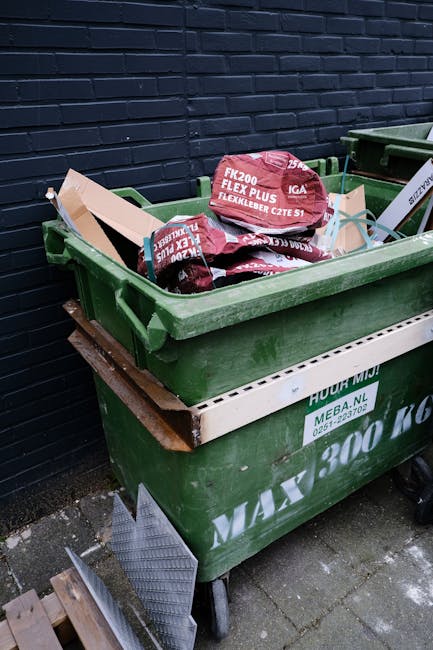
Common Mistakes to Avoid
This is where many fines, complaints, and delays start. None of these mistakes are rare.
- Putting waste out too early. Especially with bins or bulky items, timing matters.
- Assuming all waste is treated the same. It is not. Garden waste, builder's waste, and furniture follow different expectations.
- Using an unsuitable skip location. A skip in the wrong place can cause permit issues or access problems.
- Overfilling bags or bins. Loose rubbish falls, blows away, and creates nuisance.
- Leaving items in shared areas. Hallways, bin stores, and pavements are not staging zones.
- Ignoring hazardous materials. These are the items most likely to cause trouble if they are mixed in carelessly.
- Failing to plan around parking and access. This is a classic London problem. Streets look fine on paper, then the van arrives and reality says otherwise.
One slightly silly but very real mistake is assuming "just one item" can be left anywhere. A single mattress can still become a nuisance if it blocks a gate or sits beside communal bins for three days. Small is not always harmless.
Tools, Resources and Recommendations
You do not need fancy software to manage waste properly. A few simple tools and habits are usually enough.
- Phone camera: Useful for recording what needs removing before you book anything.
- Basic tape measure: Handy for doorways, stairwells, furniture, and access points.
- Labels or marker pens: Great for sorting items into keep, donate, recycle, and remove.
- Checklists: Especially useful during house moves, office moves, and end-of-tenancy clear-outs.
- A reliable clearance plan: This may be a skip, a collection slot, or a full-service removal.
For people who want a broader overview of available help, the services overview is a helpful starting point. If you are comparing services or want to understand what a provider can handle, that page can save you a few back-and-forth messages.
When the job involves bulky furniture, the furniture disposal service may be a better fit than trying to manage it as ordinary rubbish. Likewise, for larger mixed loads, the general waste removal and rubbish collection options can be easier than piecing things together yourself.
Law, Compliance, Standards and Best Practice
When people talk about avoiding fines, they usually mean staying aligned with local waste rules, nuisance prevention, and sensible disposal standards. The exact enforcement route can vary depending on the issue, but the general expectations are steady: do not obstruct public space, do not dump waste illegally, and do not leave items where they create a hazard or repeated nuisance.
In practical compliance terms, the best practice is to:
- use approved collection methods for the type of waste involved;
- keep waste contained until removal;
- avoid blocking pavements, gates, entrances, and shared corridors;
- handle special items separately;
- make sure any skip use or street placement is properly authorised where required;
- work with insured, traceable, responsible removal providers for larger jobs.
For builders and renovators, that last point matters more than people think. Construction waste tends to be heavy, mixed, and awkward to move. If it is not managed properly, the result is often a half-finished site and a grumpy follow-up call. A proper builders' waste clearance arrangement is usually the cleaner route.
Best practice also includes treating recycling and sustainability as part of compliance, not an optional extra. The more carefully waste is separated, the fewer materials end up in the wrong place. If you want to see how this fits into the bigger picture, recycling and sustainability gives a useful perspective.
And yes, the formal side can feel a little dry. But once you get the habit, it becomes just another part of looking after a property properly.
Options, Methods, or Comparison Table
Different waste problems call for different solutions. The best choice depends on volume, access, speed, and how much handling you want to do yourself.
| Method | Best for | Strengths | Watch-outs |
|---|---|---|---|
| Regular bin collection | Household rubbish, recycling, small daily waste | Simple, familiar, low effort | Not suitable for bulky or special items |
| Bulky waste collection | Sofas, mattresses, white goods, awkward household items | Good for one-off large items | Needs planning and proper preparation |
| Skip hire | DIY waste, renovations, medium-to-large mixed loads | Flexible for ongoing work | May involve placement or permit considerations |
| Man-and-van style clearance | Property clear-outs, fast removals, mixed bulky loads | Useful where lifting and loading support is needed | Needs good access and clear item lists |
| Full-service waste removal | End-of-tenancy, house moves, offices, garages, lofts | Most convenient for larger jobs | Choose a provider carefully and confirm what is included |
For many readers, the real question is not "Which method is best?" but "Which method is least likely to go wrong in my situation?" That is a better way to think about it. If the property has tight stairs, no parking, or a deadline looming, convenience often wins.
People clearing out storage spaces may also find garage clearance or loft clearance more useful than a standard rubbish job, because the access and load pattern tend to be different.

Case Study or Real-World Example
A fairly typical Haringey scenario goes like this. A landlord is preparing a flat for new tenants after the old occupants moved out quickly. There is a broken wardrobe, a mattress, a few bags of mixed junk, and some garden waste left near the rear access. The bin store is already busy. There is also limited parking outside, which makes everything feel more urgent than it should.
The first instinct is often to stack items neatly and hope for the best. But in a shared building, that can backfire. Residents complain, the items block access, and the whole thing starts looking untidy within hours.
A better approach is to sort the waste, separate anything reusable, identify bulky items, and arrange a collection or clearance that suits the access. In this kind of job, a coordinated service can save a lot of time because the lifting, loading, and disposal all happen in one go. Less back-and-forth. Less chance of something being left behind.
That same pattern shows up in shop clearances too. A small retail unit in Wood Green, for example, may need packaging, shelving, and old stock removed fast so trading can continue. If that sounds familiar, Wood Green shop rubbish collection in N22 is directly relevant.
And for events, even short-term waste can become a problem if it is not planned properly. Large gatherings and celebrations need far more bins, faster turnaround, and clearer disposal staging than people expect at first glance. That is why party venues in Haringey can also be a useful reference when planning the waste side of an event.
Practical Checklist
Use this checklist before you put anything out or book a removal.
- Have you identified the waste type correctly?
- Is anything hazardous, sharp, or electrical?
- Can the item go in normal bins, or does it need special disposal?
- Is the waste bagged, bundled, or broken down where appropriate?
- Will the collection point be easy to reach?
- Do you need parking space, access clearance, or a permit-led solution?
- Have you checked whether the job is better suited to skip hire, bulky waste, or full clearance?
- Have you informed neighbours or building managers if the load could affect shared areas?
- Are you confident the provider is suitable for the job type?
- Have you planned for recycling and reuse where possible?
Quick rule of thumb: if the waste is awkward, heavy, mixed, or time-sensitive, do not leave it to chance. Small planning now can save a lot of stress later.
Get a free quote today and see how much you can save.
Conclusion
Avoiding fines in Haringey is not really about memorising a pile of rules. It is about handling waste sensibly: identify it, separate it, store it properly, and use the right disposal route. That alone covers most of what residents, landlords, and businesses need to know.
Once you get used to the rhythm of it, the whole thing becomes less daunting. A proper plan keeps the street tidier, the property safer, and everyone a bit happier. Which, to be fair, is usually the point.
If your job is bigger than a normal bin day, or the access is awkward, it is worth choosing a service that matches the reality on the ground rather than the ideal version in your head. That is often what separates a smooth clearance from a stressful one.
And if you are planning a larger move, renovation, or clear-out, take a calm approach, ask the right questions, and give yourself a little margin. Waste has a funny way of being more straightforward once you stop rushing it.


 Tipper Van - Rubbish Removal and Garage Clearance Prices in Haringey, N4
 Luton Van - Rubbish Removal and Garage Clearance Prices in Haringey, N4