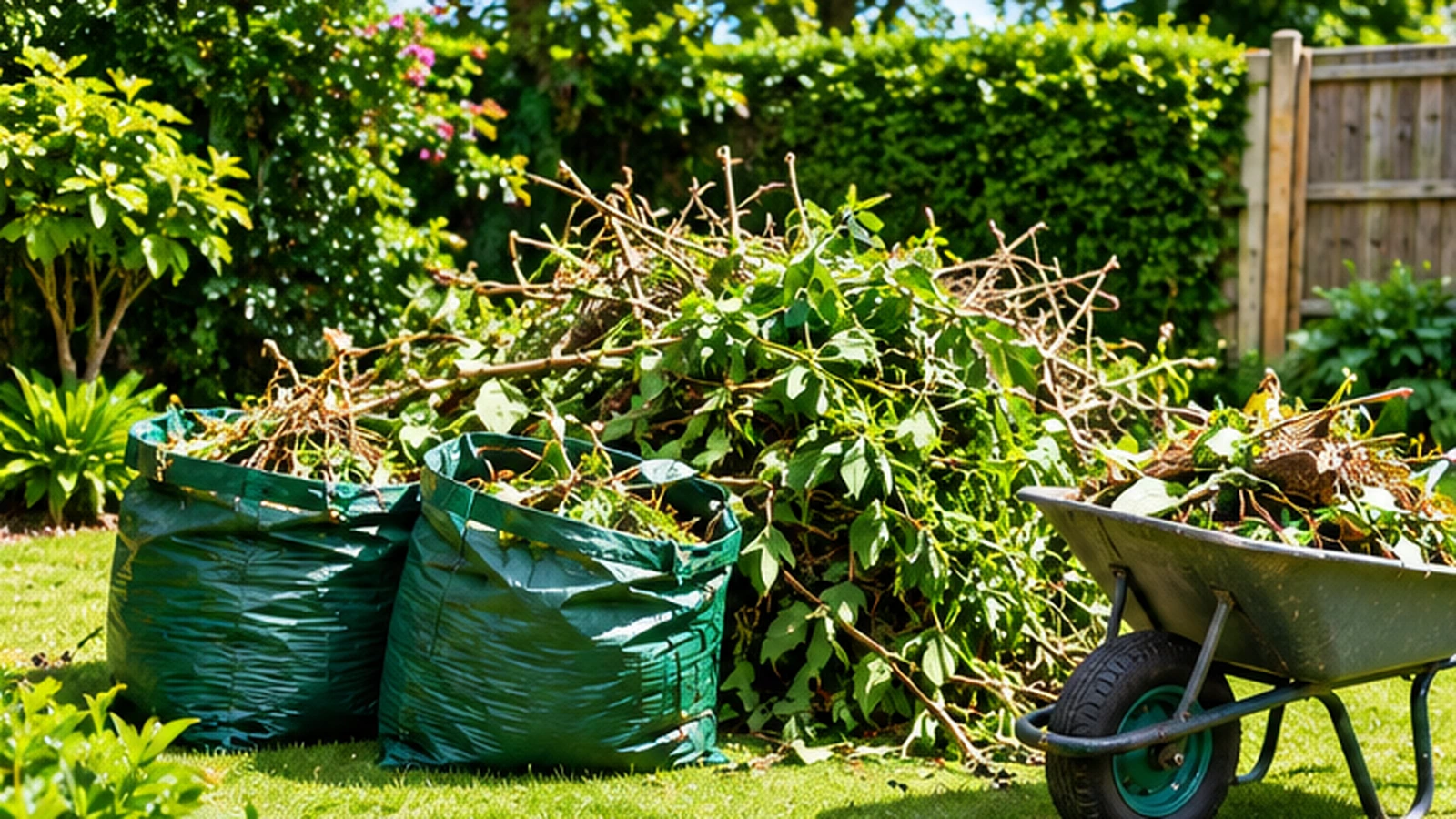
Garden Waste Removal
Branches, trimmings and suitable green waste from residential gardens.
Learn more →
LOCAL · RELIABLE · AFFORDABLE
Practical rubbish clearance for homes and businesses in Haringey N22. From one bulky item to a larger property clearance, tell us what needs collecting.
OUR SERVICES
Branches, trimmings and suitable green waste from residential gardens.
Learn more →


Sofas, wardrobes, tables and other bulky furniture collection enquiries.
Learn more →CLEAR & TRANSPARENT
Published prices include tax and are based on the volume and weight of waste collected. Loading time, weight limits and accepted waste types apply. Request a tailored quotation for your job.

Rubbish removal and garden waste disposal
| Load | Loading | Cu yd | Max weight | Bin bags | Price |
|---|---|---|---|---|---|
| Minimum | 10 min | 1.5 | 100-150 kg | 8 | £90 |
| 1/4 Load | 20 min | 3.5 | 200-250 kg | 20 | £160 |
| 1/2 Load | 40 min | 7 | 500-600 kg | 40 | £250 |
| 3/4 Load | 50 min | 10 | 700-800 kg | 60 | £330 |
| Full Load | 60 min | 14 | 900-1100 kg | 80 | £490 |

Rubbish removal and garden waste disposal
| Load | Loading | Cu yd | Max weight | Bin bags | Price |
|---|---|---|---|---|---|
| Minimum | 10 min | 1.5 | 100-150 kg | 8 | £90 |
| 1/4 Load | 40 min | 7 | 400-500 kg | 40 | £250 |
| 1/2 Load | 60 min | 12 | 900-1000 kg | 80 | £370 |
| 3/4 Load | 90 min | 18 | 1400-1500 kg | 100 | £550 |
| Full Load | 120 min | 24 | 1800-2000 kg | 120 | £670 |
CLEARANCE EXAMPLES


HOW IT WORKS
Share the items to remove, approximate volume, postcode and access information.
We assess your request against the type of waste and the applicable load band.
Confirm the available collection arrangements with the assigned provider.
CUSTOMER FEEDBACK

★★★★☆I needed a hand clearing out old furniture and clutter before my apartment move-out. The team showed up right on time, worked quickly, and was very professional. They helped me get rid of everything I didn't want anymore, making the process easier.
★★★★★Junk Disposal Haringey did not disappoint. Like last time, they were prompt, professional, and efficient, with a team that stays focused and makes the process feel effortless. Highly impressive and I'd always recommend and use them. Their pricing is reasonable and well worth it. Thank you, Junk Disposal Haringey.
★★★★★Fast, courteous, and very responsive. They were highly customer-focused, replied promptly to every question, and made the process easy.
★★★★★I've consistently been impressed by the outstanding rubbish removal provided by Rubbish Clearance Company Haringey. Their services come highly recommended for anyone needing waste disposal solutions.
★★★★★Called for a last-minute clearance after another team failed us, but the two friendly men who showed up were efficient and left the place spotless.
★★★★★Great service today from the rubbish removal team. They worked efficiently to clear the waste in my garage and completed everything very quickly.
★★★★★Smooth process all the way. Their communication and clear instructions made a difference.
★★★★★Overall, a positive experience--waste collectors were polite and helpful.
★★★★★Very happy with the collection efforts--the team was friendly and accommodating.
★★★★★Impressed with the efficiency. Booking was easy, pricing fair, and the team kept their word. Loved the before and after photos.
YOUR QUESTIONS ANSWERED
Published Tipper Van and Luton Van minimum-load prices start at £90 including tax. The total depends on the volume and weight of the waste, the applicable load allowance and the job details. Check the full price tables for each van type.
The two vans have different published volume, weight and loading-time limits. Tipper Van loads range from 1.5 to 14 cubic yards; Luton Van loads range from 1.5 to 24 cubic yards. The right option depends on the waste and collection arrangements.
These are available service enquiry categories. Describe the items before booking so that suitability, restricted materials and the collecting contractor's requirements can be checked.
Short-notice collection may be possible, subject to contractor availability, waste type and property access. We cannot guarantee a same-day slot before confirming arrangements.
Tell us the waste type, approximate volume, N22 collection postcode, and whether there are stairs, lifts, parking restrictions or other access issues. Photos can help with mixed or bulky loads.
Bookings are coordinated with independent waste contractors. Carrier registration is checked and appropriate paperwork, including a Waste Transfer Note where legally required, must be provided by the collecting contractor.
Rubbish Removal Haringey provides a practical clearance service for households, landlords, offices and builders who need unwanted waste removed in Haringey. The work can cover single bulky items, mixed loads, room-by-room clearances and more structured waste removal where access, sorting and disposal all need to be handled properly. Our approach is straightforward: identify the items, choose the most suitable clearance method and remove the waste in a way that keeps the job organised.
When a property has accumulated rubbish gradually, or a project has left behind a wider mix of debris, planned removal is often the easiest way to get the space back under control. We can handle typical items such as general household rubbish, furniture, bagged waste and trade leftovers, with the exact load shaping how the clearance is arranged. If you want a quick first look at the options, browse the services overview and then decide which type of clearance fits the job best.
For many customers, the main benefit is not only that rubbish leaves the site, but that the job is dealt with in a tidy, structured way. That can matter where waste is spread across multiple rooms, tucked into corners or mixed with items that should be retained. If you already know the broad type of work required, a plain written enquiry is enough to start a quotation request. If you are still comparing services, the next sections explain the main clearance categories in more detail.
Domestic clearance usually needs more than a simple uplift because homes often contain a mixture of loose rubbish, reusable items, awkward furniture and items that need separating before disposal. A good clearance plan takes account of what is in each room, whether the work is a partial or full clear-out and how much sorting is needed on site. That keeps the process more efficient and helps avoid unnecessary handling of items that do not need to go.
In practical terms, household rubbish removal may include old appliances, broken furniture, bagged clutter, packaging, cupboards emptied after a move or general waste left after decorating or redecorating. Some jobs are straightforward and contained; others involve lofts, garages, spare rooms or hallways where access is tighter. If you need to compare domestic options, the house clearance page is useful for understanding broader property clearances, while the rubbish clearance page suits more general mixed loads.
Useful details for a domestic quotation often include the type of items, whether they are loose or already bagged, and whether the clearance is limited to one area or spread through the property. You do not need to turn the request into a long explanation; a brief description is usually enough. Simple, accurate information helps the job be priced more sensibly than guesswork does, especially where large furniture or heavy waste changes the handling involved.
Outdoor and storage areas often collect waste that does not fit neatly into a standard household tidy-up. Garden cuttings, branches, soil-contaminated material, broken tools and general outdoor clutter can all need different handling from ordinary domestic rubbish. Likewise, garages and lofts may contain old household items, forgotten boxes, offcuts and mixed waste that must be cleared carefully so the useful contents are not disturbed.
Each of these areas has a distinct character, and choosing the right service matters. The garden waste removal page suits green waste and outdoor debris, while the garage clearance and loft clearance pages are better for enclosed spaces where access and sorting are part of the task. If the load contains a mix of household and loose junk, the junk removal page may also be relevant.
When these spaces are cleared properly, the work is usually less about speed than about control: what is removed, what stays, and how the load is separated. That can be particularly important in lofts where items are stacked tightly, or gardens where waste may be damp, bulky or awkward to carry. If you want a quotation, it helps to mention the access route, the rough amount of waste and whether anything needs to be removed from upper floors or enclosed spaces.
Haringey is a North London borough with a varied built environment that ranges from dense urban high streets to greener residential districts and open hilltop spaces. Its present form dates from the local government reorganisation of 1965, when the former boroughs of Hornsey, Tottenham and Wood Green were brought together. That mixed origin is still visible in the area’s streets and landmarks, where Victorian terraces, interwar housing, civic buildings and newer developments sit alongside older village-like pockets. Alexandra Palace is one of the best-known landmarks, standing high on the hill with wide views across London and a long history as an entertainment and events venue. The borough also contains parts of the extensive green corridor formed by the Parkland Walk, which follows the route of a former railway line and offers a quieter contrast to the busier roads nearby. In the east and south, places such as Tottenham and Harringay have a strong urban character, while Muswell Hill and Crouch End are known for their independent shops, residential streets and local cultural activity. Wood Green has long functioned as a commercial centre, with retail streets and transport links making it a focal point for daily movement across the borough. Haringey’s identity is therefore not built around a single centre, but around a set of distinct neighbourhoods, each with its own pattern of architecture, open space and local history. That variety gives the borough a layered character, with historic streets, parks, leisure venues and busy town-centre areas all contributing to the sense of place.
Building work creates a different type of clearance need from domestic clutter because the waste is usually heavier, dustier and more varied. Offcuts, packaging, broken fixtures, old fittings, plasterboard, timber and mixed site debris may all need to be collected in one visit or over several stages as the project progresses. The main concern is keeping the work area safe and manageable while making sure the waste is removed in the right sequence.
Where the clearance is tied to renovation or construction, it is worth considering the scale of the material before choosing the service. The builders waste clearance page is the best fit for trade debris and renovation leftovers, while the waste removal page works well as a broader option for mixed non-hazardous loads. Customers planning larger projects can also compare the prices page with the more detailed pricing and quotes page to understand how different types of job are approached commercially.
For clearances linked to ongoing work, a sensible description usually includes the kind of material, whether it is from demolition, refurbishment or strip-out, and how much is ready for removal. That helps the quotation reflect the actual handling involved rather than treating every builders’ load as the same. If the waste contains sharp, dusty or awkward items, mention that too; it allows the clearance to be planned with more care and avoids unnecessary surprises on the day.
Commercial clearances are often about reducing disruption as much as removing waste. Offices can accumulate obsolete furniture, filing, packaging, broken equipment and general clutter that needs clearing without getting in the way of day-to-day work. In shared or multi-room premises, the job may also involve separating items from areas that are still in use, which is why a careful sequence can be more important than simple loading capacity.
The office clearance page is the most relevant destination where desks, chairs, cabinets or old workstations need to be taken away. For business customers who want a broader understanding of how services are set out, the about us page gives background on the business, while the insurance and safety page is useful where care around access and handling is especially important. If payment method or secure processing matters to your office team, the payment and security page may also be worth reviewing.
Commercial customers usually save time by describing the items that stay, the items that must go and any building rules that affect access. That might include lift use, loading arrangements, restricted hours or the need to work around staff. A clear quotation request does not need to be long, but it does need to be specific enough to reflect the real conditions on site. Please request a quotation if you would like the next step handled without delay.
Some clearances are best understood by item type rather than by room. Large furniture, awkward household items and mixed loads can all need a different approach from bagged waste because they take more space, may need dismantling and often require extra care when carried through narrow hallways or stairwells. The right service is the one that matches the shape of the load as well as the quantity.
Where items are primarily bulky rather than numerous, the furniture disposal page is a better fit than a general rubbish page. For one-off heavy items or broader mixed clearances, the rubbish collection page may be more suitable, especially where the job is focused on removing what is already assembled and ready for lifting. If the work involves old household contents rather than a small number of bulky items, the house clearance route remains the stronger option.
A useful quotation request for this kind of job usually notes how many larger items are involved, whether any are broken or dismantled and whether there are stairs, basements or shared entrances. That information helps distinguish a simple lift-and-load from a more involved collection. Where possible, list the biggest items first; it gives the clearest picture of what needs to be moved and what equipment or space may be required.
Quotation work is more accurate when it is based on the practical elements of the job rather than on a single broad description. The volume of waste, item type, ease of access, time on site and whether sorting is needed all influence the way a clearance is organised. A small load in easy access conditions is not the same as a bulkier clearance from upper floors or a cluttered property, so the details matter.
The most useful pricing pages are the prices page and the pricing and quotes page, which give a stronger sense of how the business presents its commercial information. Customers who want to understand disposal standards can also look at recycling and sustainability for a broader view of waste handling, while the terms and conditions page sets out the formal framework behind the service. These pages are useful when a job needs both practical and administrative clarity.
Two simple pieces of preparation can make the quote process smoother: first, think about the main categories of waste rather than trying to name every object; second, note anything that affects access, such as stairs, parking or restricted entry. That is usually enough for an initial response. If the load includes unusual items, mixed trade waste or clear-up work across several rooms, mention that in the enquiry so the arrangement can be built around the real job rather than an assumption.
Before booking any clearance, many customers like to confirm which page best matches the work. That is sensible because the service choice can depend on whether the job is domestic, commercial, garden-based, builder-related or centred on a few bulky items. Matching the page to the task keeps the enquiry clearer and avoids overcomplicating what is often a straightforward removal job. If you are exploring the site, start with the broad service categories and then narrow the choice from there.
For example, a garden tidy-up is a different task from an office clear-out, and a garage full of forgotten items is different again from builders’ debris after a refurbishment. The access problems article can be useful where stairways or restricted access may affect the job, while the hidden charges article offers a helpful commercial perspective on what to clarify before you go ahead. For a general introduction to the site’s content, the blog also contains related topics about local waste work and property clearances.
When you are ready to ask for a quotation, keep the request focused on the load, the location within the property and any access limitations. That keeps the conversation efficient and helps the next step feel practical rather than formal. If you want to move ahead now, send your details for a quote and describe the waste as clearly as you can.
Some clearances benefit from a more specific local focus, especially when the waste type or setting is distinctive. Sports venues, busy shopping streets and larger residential districts can all generate different clearance patterns, from bulky waste to recurring trade debris. A service site often explains those distinctions through dedicated pages that focus on the common kinds of job rather than a single generic description.
The blog section includes several relevant local topics, such as Wood Green shop rubbish collection, Harringay Green Lanes bulky waste removal and Alexandra Palace rubbish removal. These articles are useful where the setting itself helps define the kind of waste work involved. For customers comparing different household and commercial needs, the council rules article also provides a helpful reference point.
Need a quotation? Start with the page that best matches the work, then send a short description of the items, location and access conditions. A clear enquiry is usually the quickest way to turn a rough estimate into a workable plan, especially where the job combines several waste types or includes awkward lifting. The aim is simple: choose the right service and make the clearance process as orderly as possible from the outset.